Wall-Mounted Cat Shelves Set for Safe Vertical Play
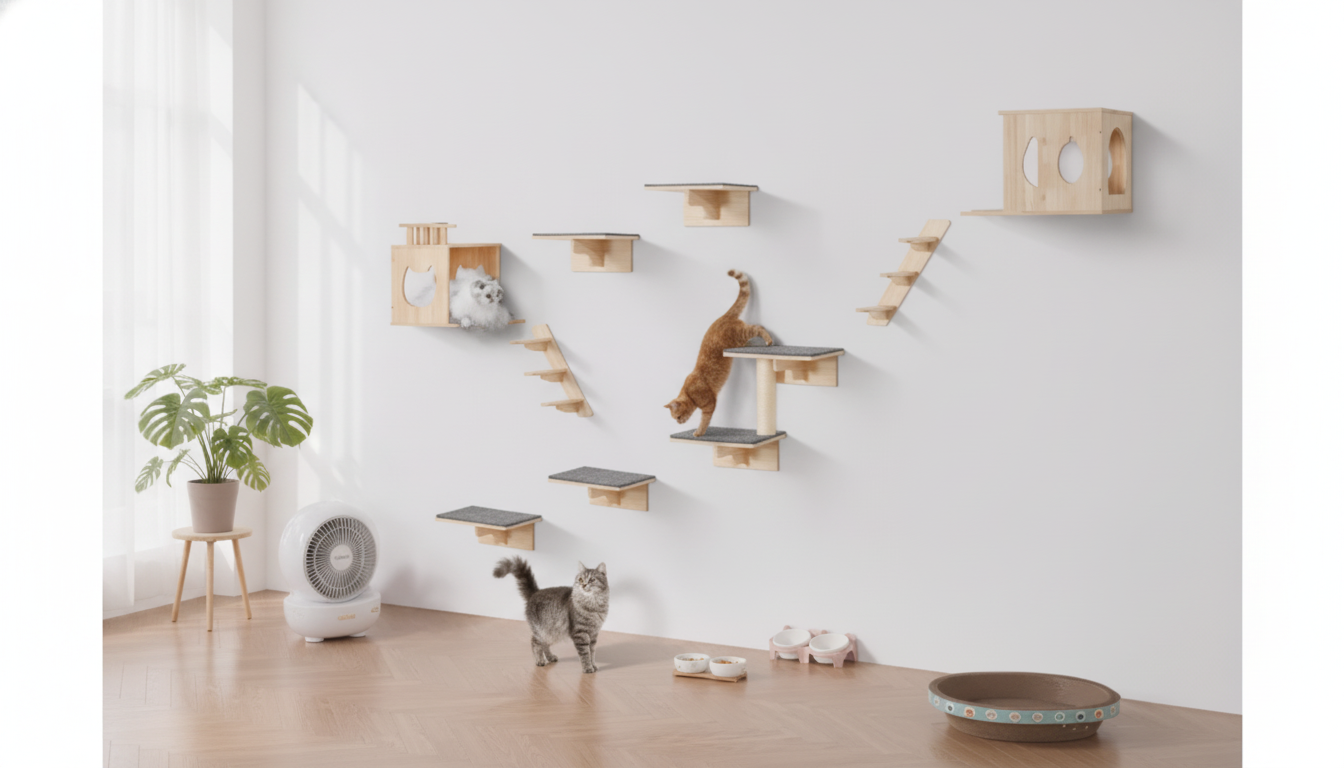
Wall Mounted Cat Shelves Set: A Vertical Playground for Confident Climbers
Wall-mounted cat shelves turn unused wall space into a safe, enriching route for climbing, perching, and resting. A well-planned set can reduce boredom, protect furniture, and give cats a predictable path through the home—without taking up floor space. For indoor cats especially, thoughtfully placed vertical “lanes” can add daily movement, mental stimulation, and a sense of control over their environment. Guidance from feline behavior and welfare resources consistently highlights enrichment and choice as key components of a healthy indoor setup (see Ohio State’s indoor cat enrichment and the AAFP feline-friendly housing guidelines).
Why wall shelves work so well for cats
- Supports natural behaviors: Cats are built to climb, scan territory, and pick elevated resting spots where they feel secure.
- Creates “traffic lanes” above the floor: In multi-cat homes, vertical routes can offer alternate ways to pass without close contact, helping reduce tension.
- Encourages movement and play: Short climbs and jumps add low-impact exercise bursts that fit naturally into a cat’s day.
- Redirects jumping to approved routes: A consistent shelf path can be more appealing than counters or fragile displays—especially when it leads to a “destination” perch.
What’s typically included in a wall-mounted shelves set
- Perch-style platforms for resting, watching, and lounging.
- Step shelves that function like a staircase between levels.
- Optional scratching surfaces or textured covers (varies by set).
- Mounting hardware and basic instructions to plan and install safely.
- Modular layout options that adapt to corners, hallways, or above furniture.
Planning a layout that cats actually use
The most successful setups feel intuitive to a cat: easy to start, clear to navigate, and rewarding at the end. Instead of thinking “highest shelf possible,” aim for a comfortable route your cat will choose repeatedly.
- Start with a simple path: low step → mid perch → higher resting shelf. This “ladder” pattern builds confidence quickly.
- Place the first step for the least agile cat: If one cat is older, heavier, or cautious, design for them first—athletic cats will still use it.
- Create clear destinations: A window view, a sunny wall, or a quiet corner perch gives the route a purpose beyond “just climbing.”
- Keep the route predictable: Cats often prefer a consistent, repeatable pathway rather than a random scattering of platforms.
- Avoid sensitive zones: Don’t place shelves directly over feeding stations, litter boxes, or fragile décor where accidents create stress.
Sizing, spacing, and placement guidelines
Comfort and safety come down to a few practical details: platform size, jump distance, and stable mounting. When those basics are right, most cats adapt quickly.
- Choose platforms for full-body comfort: A main perch should allow lounging and turning around without stepping off the edge.
- Adjust vertical gaps to the cat: Kittens, seniors, and cautious climbers do better with shorter spacing; athletic jumpers can handle larger gaps.
- Plan for tail clearance: Corners, window trim, and nearby shelves should leave space for a relaxed sit without whiskers and tail constantly brushing surfaces.
- Mount for the real load: Use stud mounting when possible, or the right anchors for the wall type and expected weight.
- Add a “landing shelf” on key routes: A midway platform reduces the need to jump down too far and can prevent slippery dismounts.
Quick planning checklist for a safe, usable setup
| Decision | What to check | Practical tip |
|---|---|---|
| Starting height | Can the least agile cat reach the first step? | Use a low starter step near a sofa or sturdy ottoman as an intermediate launch point. |
| Vertical spacing | Are jumps manageable without slipping? | Tighten spacing if using smooth wall finishes or if the cat is hesitant. |
| Shelf size | Can the cat lie down and turn easily? | Pick larger platforms for main perches; smaller steps for transitions. |
| Wall type | Drywall, plaster, brick, concrete? | Match anchors to wall material; studs are best whenever possible. |
| Traffic flow | Does the route avoid clutter and door swings? | Keep shelves away from doors that may startle a cat mid-climb. |
Materials and comfort features that matter
Installation essentials and safety checks
Helping a cat feel confident using the shelves
A ready-to-mount option
If you want a coordinated, modular way to build a vertical route, the Wall Mounted Cat Shelves Set offers matching pieces that can be arranged into a practical climbing lane. It’s a simple way to create a dedicated climbing zone in living rooms, bedrooms, or home-office corners where cats like to supervise without taking over floor space.
For households that enjoy mixing vertical cat space with gentle, supervised floor challenges, the 6 PCS Kids Balance Beam Stepping Stones for Toddlers can also work as a temporary “stepping path” on the floor during play sessions—useful for puzzle-style treat games or confidence-building, then easy to put away when company comes.
FAQ
How high should wall-mounted cat shelves be?
Aim for a height that your cat can reach comfortably by following a step-by-step path, not one big leap. The first step should be reachable for the least agile cat, and higher perches work best when they’re connected by intermediate shelves that create a safe, predictable route.
Can cat shelves be installed on drywall?
Yes, but studs are preferred for maximum stability. If you can’t hit studs, use drywall-rated anchors that match the shelf’s load requirements, confirm your wall type, and re-tighten hardware after the first week of use.
How far apart should cat shelves be?
Spacing depends on your cat’s confidence and mobility: kittens, seniors, and cautious cats usually do best with shorter gaps, while athletic cats can manage larger jumps. When in doubt, add an intermediate step and keep spacing consistent along the route to build confidence.









Leave a comment