Stable 5-Level Cat Tree: Metal Frame, Hammock, Perch
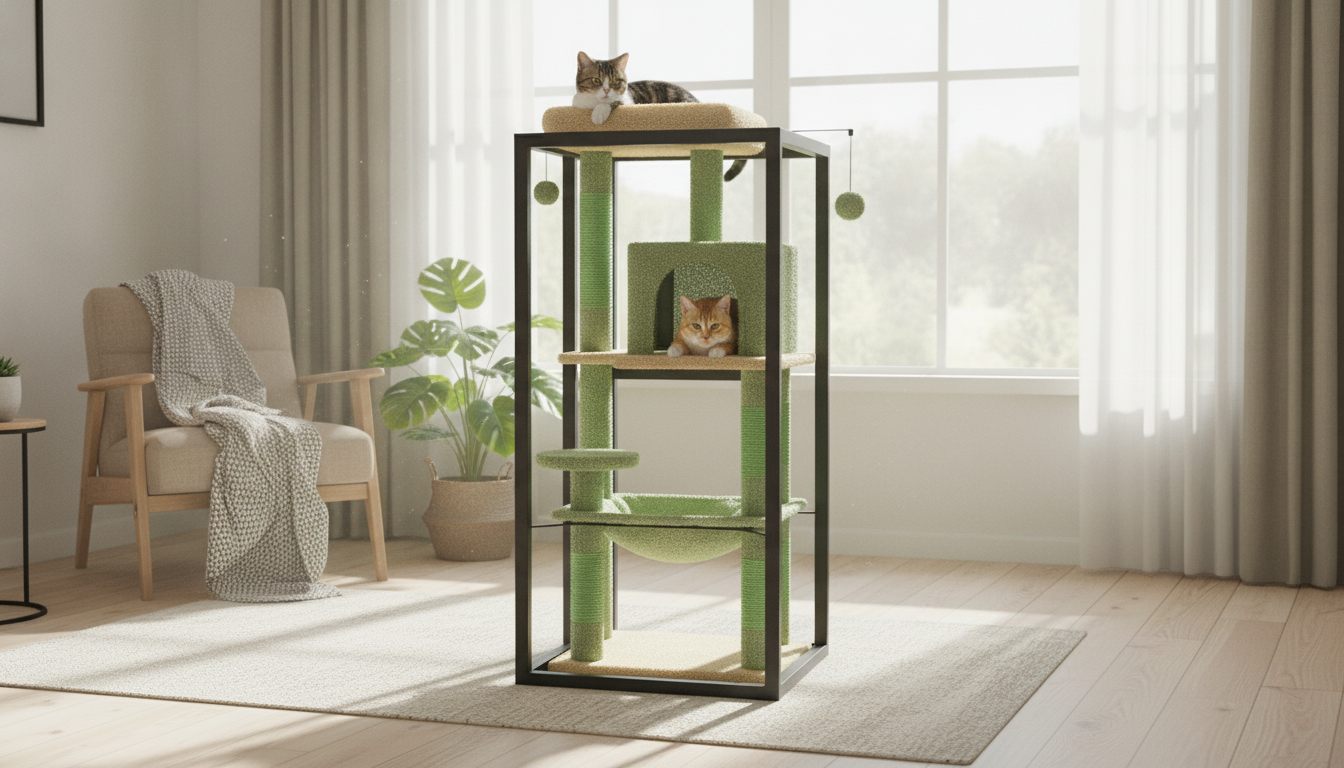
5-Level Cat Tree with Metal Frame, Hammock, and Top Perch
A sturdy vertical space can turn a small corner into a climbing, lounging, and scratching zone—especially for bigger cats that need a stable base. This 5-level cat tree pairs a metal frame with multi-level platforms, a hammock-style rest spot, and an elevated top perch for confident surveying and daily naps. When the “up-high” options feel secure, cats tend to use them more often—trading couch backs and countertops for a spot that’s actually theirs.
What this cat tree adds to a cat’s daily routine
Indoor cats thrive when their day includes movement, choice, and safe resting areas. A multi-level tower helps meet those needs by creating a predictable route upward, multiple pause points, and dedicated scratch zones.
- Vertical climbing route that supports natural jumping, stretching, and full-body movement.
- Dedicated rest options: hammock-style lounging plus a higher perch for security and “I can see everything” comfort.
- Scratch-friendly zones that help redirect claws away from furniture (best paired with regular nail trims).
- Multi-cat friendliness: separate levels reduce crowding and resource guarding around favorite spots.
- A clear “up-high” escape can reduce stress in busier homes and give shy cats a reliable retreat.
For more on why vertical space and enrichment matter for indoor cats, see Environmental enrichment for indoor cats (The Ohio State University) and the AAFP and ISFM Feline Environmental Needs Guidelines (International Cat Care).
5-level layout: how the spaces get used
Even when two cat trees look similar, cats often “assign” each level a job. A five-level layout gives enough variety for different moods—play bursts, mid-climb pauses, tucked-in naps, and a top-level lookout.
- Lower levels often become step platforms for kittens or heavier cats that prefer shorter, safer climbs.
- Mid-level platforms are ideal for quick breaks between play and rest without committing to the top.
- Hammock rest spot tends to attract cats that like a gentle cradle feel or warmer, tucked-in naps.
- Top perch becomes a favorite for window views, household monitoring, and undisturbed lounging.
- Placement matters: set it near a window or in a main room so the upper levels stay interesting.
Quick guide to where each feature typically shines
| Feature | Typical use | Placement tip |
|---|---|---|
| Top perch | Lookout, confident lounging | Near a window; avoid direct HVAC drafts |
| Hammock | Cradled naps, warm resting | Slightly away from heavy foot traffic |
| Mid platforms | Play breaks, social observation | Adjacent to furniture for easy transitions |
| Lower platforms | Safer step-ups for larger cats | Keep clear of clutter to prevent slips |
| Base area | Stability + scratch access | On a flat surface; consider a mat for hard floors |
Metal frame benefits for larger cats
For bigger bodies and stronger launch-offs, stability is what turns “maybe later” into “this is my spot.” A metal frame can increase rigidity and help the tower feel predictable underfoot.
- Reduced wobble during jumping, turning, and quick pivots.
- More confident climbing for heavier cats that hesitate on towers that sway.
- Long-term durability: metal framing can better handle repeated load cycles over time.
- Multi-cat ready when multiple cats rotate through the same structure all day.
- Best stability tip: keep the base fully flush on an even floor (no rocking corners).
Comfort details: perch height, hammock feel, and nap zones
Cats often rotate between “open” resting (flat platforms and perches) and “nest-like” resting (a hammock or bowl that hugs the body). That variety matters: one day a cat wants a breezy lookout, the next day they want to feel tucked in.
- Perch height supports security—especially for cats that relax more when they can watch the room.
- Hammock feel suits cats that like a gentle cradle and deeper, longer naps.
- Warmth boosts use: a patch of sun on one level can turn it into the “reserved” seat.
- Texture tweaks: add a small washable throw or thin pad if your cat prefers softer fabric (make sure it won’t slide).
Where to place it for fast acceptance
Placement is the difference between a cat tree that becomes the home’s best seat and one that gets ignored. The goal is to make the top levels rewarding and the climb feel safe.
Setup, safety, and maintenance
Product at a glance
| Item | Info |
|---|---|
| Product | 5-Level Cat Tree for Large Cats with Metal Frame, Hammock, and Top Perch |
| Price | 55.97 USD |
| Availability | In stock |
Also in stock (popular picks)
- Battery-Powered Backpack Sprayer with Cart – 4 Gal, Adjustable Pressure, Multi-Nozzle for yard and garden care with adjustable output.
- 6 PCS Kids Balance Beam Stepping Stones for Toddlers for indoor play paths and movement games.
- 18K Gold Plated Daisy Drop Earrings for a simple, giftable accessory option.
FAQ
Is a metal frame cat tree better for large cats?
A metal frame can reduce wobble and make the climb feel more secure for heavier cats, which often increases how much they use it. For best stability, assemble it carefully and place the base fully flush on a flat, even surface.
How do you get a cat to use the top perch and hammock?
Place the tree near a window or a calm social area, then encourage exploration with treats, catnip, or a wand toy that guides them up level by level. Keep routes clear and give your cat time—most cats warm up faster when they’re not forced.
Where should a cat tree be placed in a small apartment?
A window-adjacent corner or a spot near the main living area usually gets the most use, as long as it’s not in a narrow walkway. In multi-cat homes, try to allow two approach paths so one cat can’t guard the entry.







Leave a comment