Kids Wooden Bookshelf Guide: Size, Safety, Setup
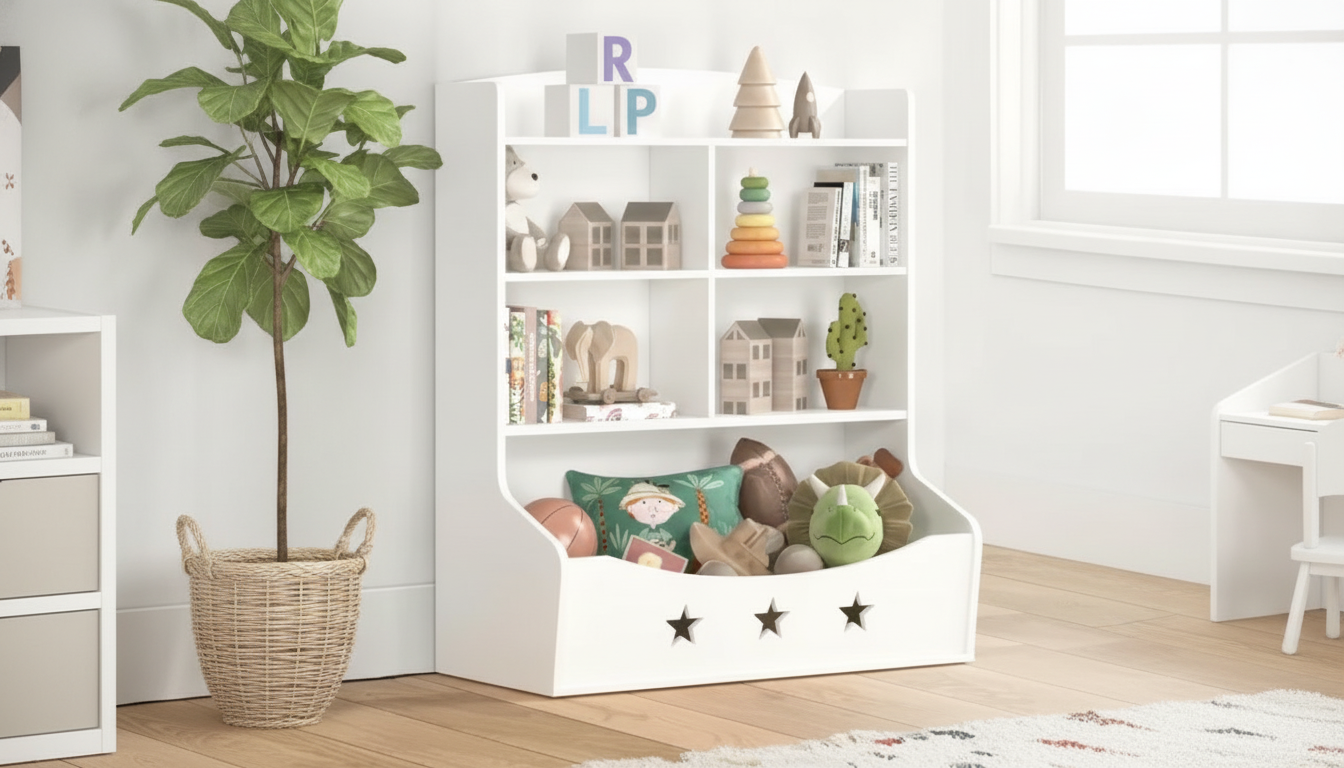
A kids wooden bookshelf helps children see book covers, pick stories independently, and return items to the right spot. With the right size and layout, it becomes part of daily routines—reading, cleanup, and keeping a calmer play space.
Why a Wooden Bookshelf Works Well in Kids’ Spaces
Wooden bookshelves fit naturally into the places where kids actually read: bedroom corners, playrooms, and shared family rooms. Beyond looking warm and homey, a kid-sized shelf can make reading and cleanup feel straightforward.
- Encourages independence: reachable shelves make it easy to choose and put back books without adult help.
- Supports routines: giving books a consistent “home” reduces clutter, lost library books, and random piles.
- Warm, durable feel: wood blends with most decor and stands up to everyday bumps and busy hands.
- Versatile storage: it can hold picture books, board books, activity books, and small baskets for extras.
What to Look For Before Buying
A bookshelf for kids should be easy to use, stable, and comfortable in the room. A few practical details make a big difference once it’s filled with books and used daily.
- Height and reach: shelves should be accessible for the child’s age and mobility, so browsing doesn’t become a “grown-up only” activity.
- Stability: a wider base, sturdy construction, and optional wall anchoring help prevent tipping.
- Shelf depth: deeper shelves fit larger picture books; shallow shelves keep covers visible so kids can spot favorites quickly.
- Edge finishing: smooth corners and edges reduce bumps and snags during hurried cleanups.
- Finish and materials: low-odor finishes and easy-to-wipe surfaces simplify everyday use (especially with sticky fingers).
Sizing Guide by Age and Room
The “best” bookshelf depends on both your child’s stage and the space you’re working with. Aim for a layout that supports how your child chooses books today while leaving room for the next phase.
By age
- Toddlers: low shelves and front-facing display make browsing simple and reduce book dumping.
- Preschoolers: a mix of display and spine-out storage supports growing collections and early sorting skills.
- Early readers: add room for chapter books, notebooks, and school folders to keep everything in one spot.
By room needs
- Small rooms: a narrow footprint or vertical design saves floor space while still keeping books accessible.
- Shared rooms: choose a layout that can assign each child a shelf or bin to reduce mix-ups.
Quick guide to choosing a kids bookshelf layout
| Room/Need | Recommended layout | Helpful details |
|---|---|---|
| Tiny bedroom | Tall, narrow shelf | Keeps floor space open; consider wall anchoring |
| Playroom reading nook | Front-facing display shelf | Cover visibility boosts browsing and daily use |
| Shared siblings | Multi-shelf organizer | Assign shelves or labeled bins to reduce mix-ups |
| Big picture-book collection | Deeper shelves | Fits oversized books without bending covers |
Safety and Placement Tips
Bookshelves are meant to make a room calmer—not add worry. Thoughtful placement and basic maintenance help keep kids safer around furniture. For broader guidance, see the U.S. Consumer Product Safety Commission’s tip-over prevention resources at CPSC Furniture Tip-Over Prevention and child home safety guidance at HealthyChildren.org (AAP) — Home Safety for Children.
- Anchor when possible: use anti-tip hardware if included or compatible with your wall type.
- Keep heavier items low: store large books and bulky volumes on lower shelves for stability.
- Avoid climb temptations: don’t place toys that invite climbing on top (or anything that looks like a “prize”).
- Mind traffic flow: keep the shelf away from door swings, tight pathways, and the end of a hallway sprint route.
- Check regularly: tighten hardware occasionally and inspect for wobble as kids grow and usage changes.
Daily Organization Ideas That Kids Can Maintain
The easiest systems are the ones kids can actually keep up with—especially on busy weekdays. A few small habits can prevent the shelf from turning into a catch-all pile.
- Sort by category: try “bedtime stories,” “favorites,” “library books,” and “activity books” so cleanup has simple rules.
- Use simple labels: picture labels help pre-readers; word labels work well for older kids.
- Rotate displays: keep a small “featured” row to refresh interest without buying new books constantly.
- Add baskets: small bins work well for bookmarks, flashcards, thin workbooks, and loose paper.
- Create a return habit: a 2-minute “book reset” before bed keeps the system manageable (and makes mornings smoother).
Featured Option: Kids Wooden Bookshelf
If the goal is a simple, kid-friendly place where books stay visible and accessible, a dedicated shelf sized for children can be the easiest upgrade. The Kids Wooden Bookshelf is in stock at the time of publishing and works well as a foundation piece for a reading corner.
Pairs Well With Other Kid-Friendly Gear
For movement breaks that still feel structured, the 6 PCS Kids Balance Beam Stepping Stones for Toddlers can help create an easy indoor obstacle path that stays separate from the reading area.
Care and Cleaning
FAQ
Should a kids bookshelf be anchored to the wall?
Anchoring is recommended whenever possible, especially for taller units or active toddlers who might pull up or lean on furniture. Anti-tip hardware adds stability and helps reduce tip-over risk as kids climb, tug, or slam books into place.
What’s the best bookshelf style for toddlers?
Low, front-facing shelves are usually easiest because toddlers can see covers and grab books without digging. Look for smooth edges, a stable base, and keep heavier books on the bottom to improve steadiness.
How can a child keep their bookshelf organized?
Use a few simple categories, clear labels, and small baskets for loose items like bookmarks and workbooks. A short daily reset—just a couple of minutes—keeps the shelf from becoming an overwhelming project, and rotating a few displayed books can renew interest.






Leave a comment